


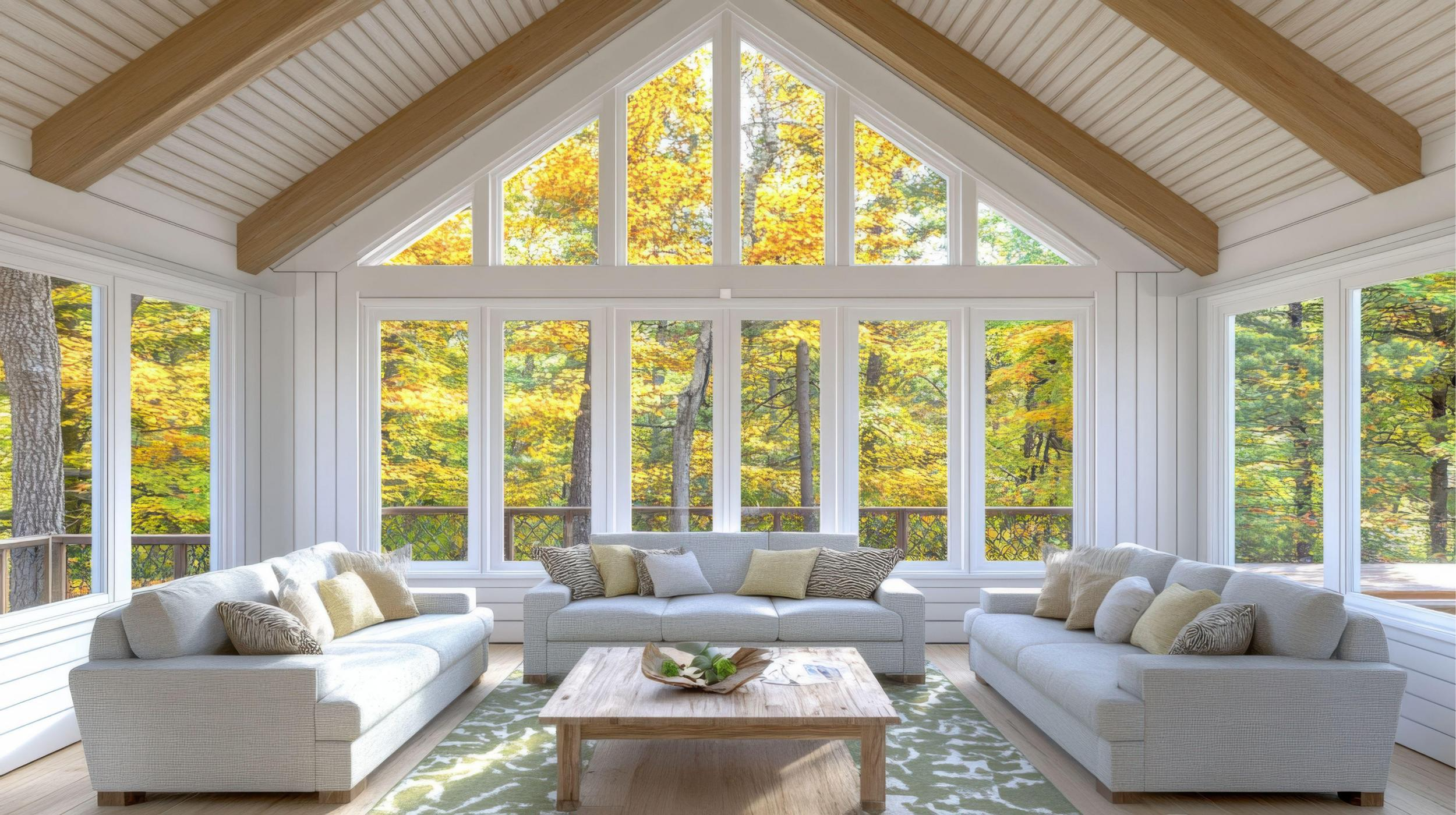
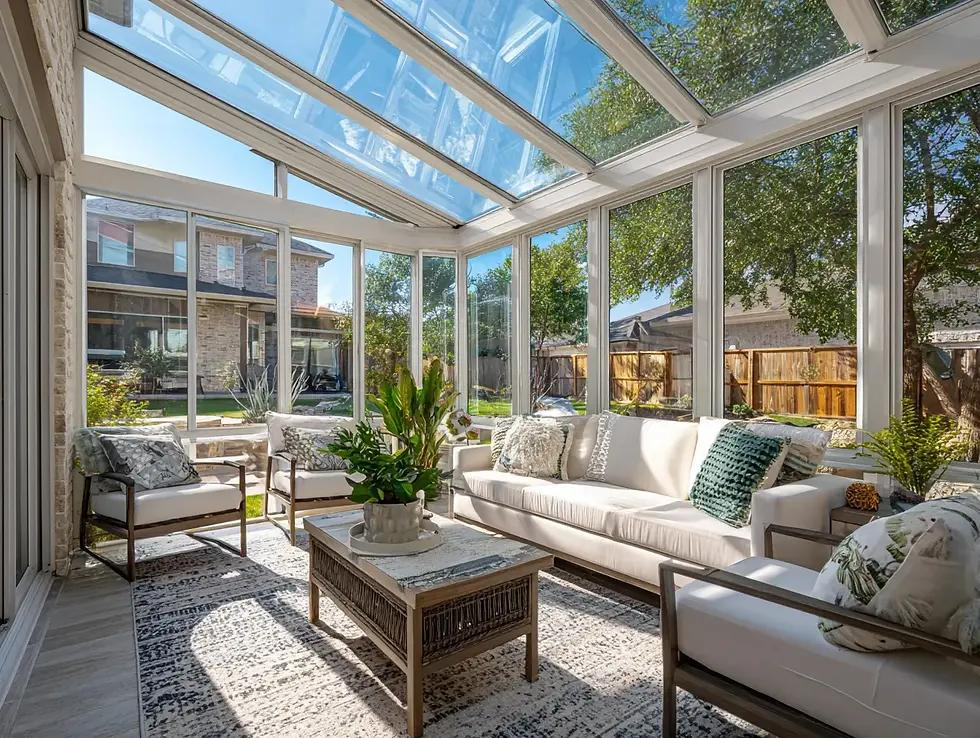
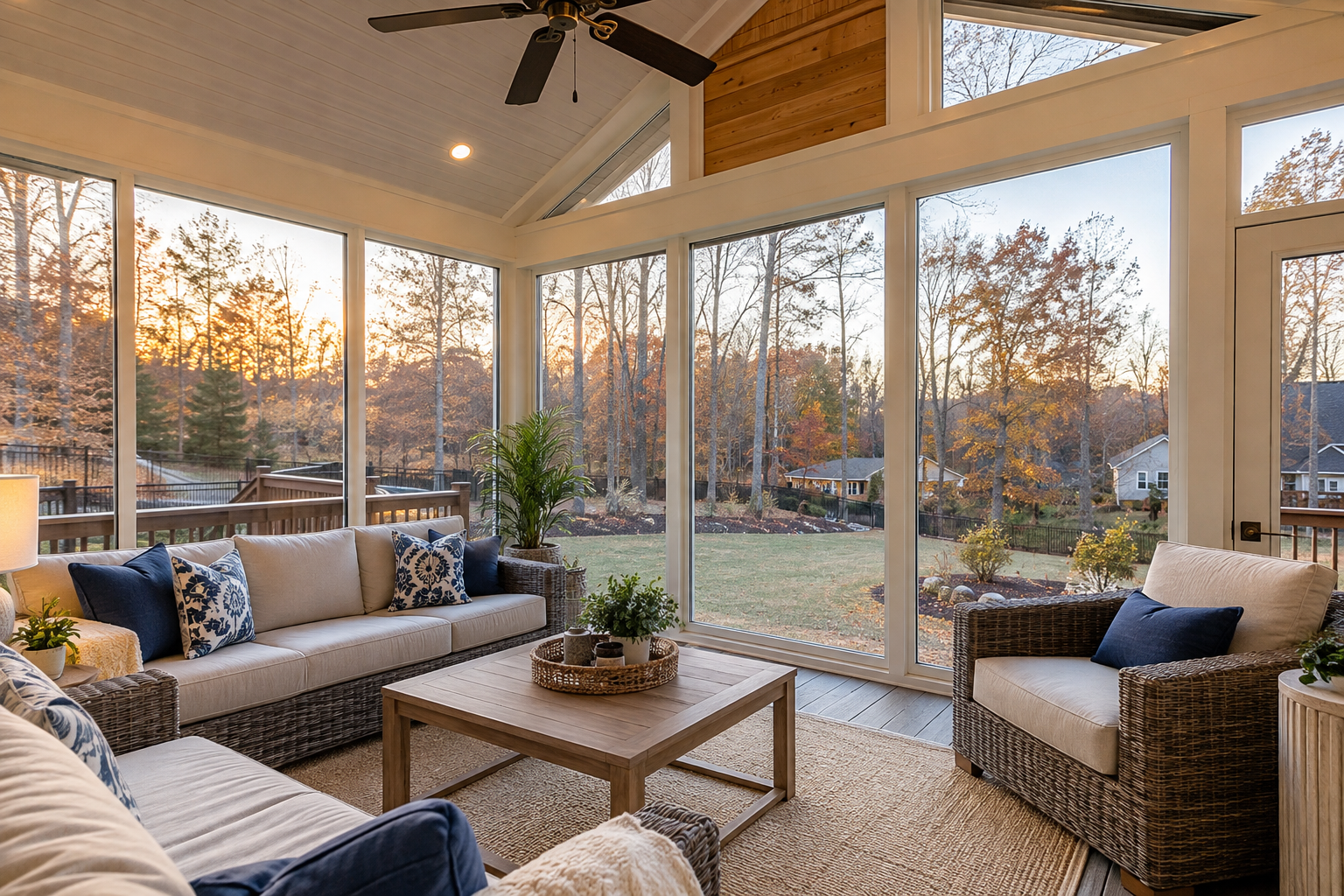
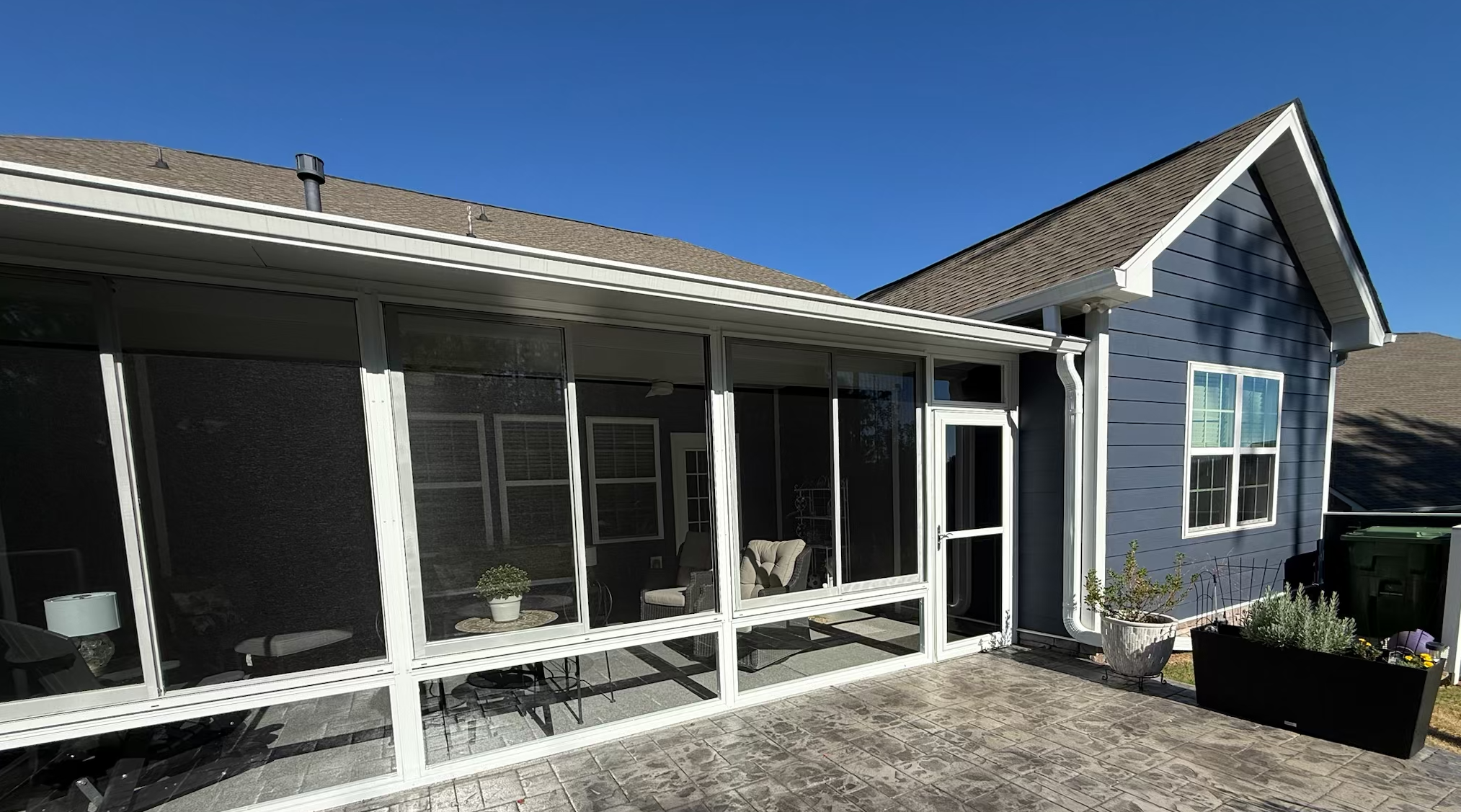
As the cooler weather finally makes its way to North and South Carolina, many homeowners are looking to extend their time outdoors. That has many asking whether they can heat and cool their existing three-season space to make it comfortable enough for holiday gatherings.
The answer is yes, in some situations, you can heat and cool your existing three-season space. Whether it will be comfortable and economical, however, really depends on how the room was built to begin with.
Simply adding heating or air conditioning can help extend your time outside, but installing equipment doesn’t automatically turn your three-season sunroom into a four-season sunroom. Before you purchase a heating unit or schedule an HVAC installation, it helps to understand what your existing room can realistically do and what it can’t.
What Makes a Sunroom a Three-Season Room?
A three-season sunroom is generally designed to provide more protection from things like biting insects, wind, and airborne pollen than a traditional screened porch. It, however, doesn’t have all of the construction features associated with a room configured for year-round heating and cooling.
Depending on your budget and preferences, it may have glass windows or clear vinyl porch panels, an insulated roof, and varying levels of protection against wind and drafts.
A four-season sunroom takes temperature control into account throughout the entire design. Insulation, windows, framing, roofing, flooring, and heating and cooling work together to help maintain a comfortable indoor environment.
Therefore, the distinction between a three-season and four-season sunroom isn’t simply whether the room has a heater or air conditioner. It’s how well the whole space holds the temperature you are trying to achieve.
Why Heating and Cooling Can Be Challenging
If you want to heat or cool any space, your ability to maintain a comfortable temperature depends partly on how much air leaks through gaps and how easily heat moves through the enclosure’s materials. Heating and cooling can’t be an afterthought.
Several factors affect how well heating and cooling will work:
- Windows and panels: Single-pane glass and flexible vinyl panels perform differently from insulated glazing.
- Framing: The frame’s construction affects how readily heat moves between indoors and outdoors.
- Roof and floor: Large areas with limited insulation can make temperature control more difficult.
- Air leakage: Gaps around doors, panels, and other connections allow conditioned air to escape.
- Sun exposure: A room receiving strong afternoon sunshine may need more cooling than one in the shade.
Two sunrooms of the same size, therefore, can have very different heating and cooling needs.
Can You Install a Mini-Split in a Three-Season Sunroom?
A ductless mini-split heat pump can provide both heating and cooling without extending duct work from your home. That makes it an option worth discussing when evaluating an existing sunroom space.
Whether it is the right option, however, depends on the room.
An HVAC professional should evaluate the room’s insulation, window area, air leakage, sun exposure, and intended use before recommending the proper equipment. If you choose a system based only on square footage, you can easily overlook some of the biggest sources of heat gain and heat loss and undermine even the best effort at year-round comfort.
A mini-split also requires suitable installation locations and electrical service. Your contractor should confirm any permits or construction changes needed before you do any work.
Most importantly, a mini-split cannot replace missing insulation or correct unsuitable windows. It may change the air temperature while the room still feels drafty, loses heat quickly, or becomes too expensive to heat and cool throughout the year.
Can You Use Your Home’s Existing HVAC System?
Maybe.
Extending a duct into the sunroom should follow a professional evaluation. Your existing system was sized to serve a particular space. If you add another room and increase the heating and cooling demands, your equipment may not have the capacity to handle it comfortably.
The duct layout, airflow, thermostat location, and room construction also matter. Without proper planning, you could inadvertently affect the temperatures in the rest of your house while still struggling to make the sunroom comfortable.
Before you connect a sunroom to your home’s HVAC, make sure a qualified professional determines whether the system and the enclosure are suitable.
What If You Just Want a Little More Comfort?
Not everyone wants their sunroom to be comfortable enough to live in all year round. Sometimes, in North and South Carolina, shading, suitable weatherstripping, and ventilation can help, depending on the room’s design.
Ceiling fans might be enough to make you feel cooler, although they don’t lower the room’s air temperature. Retractable screens with suitable solar mesh may also help reduce direct sunlight if positioned properly.
Portable electric heaters can provide temporary warmth when used according to the manufacturer’s instructions and with a suitable electrical setup. There are all sorts of measures you can take to improve comfort in your outdoor room, but they may not provide consistent temperature control throughout the year.
When Does a Four-Season Conversion Make More Sense?
The best place to start is by asking yourself what you want to use the space for. Do you want it to be a gathering space from spring through fall with protection from mosquitoes and pollen, or do you want it to function as additional living space throughout the year?
By answering exactly what you want to do in the space, you’ll figure out the best way to approach it. An evaluation can determine whether your existing structure can be retained and what improvements are necessary.
Depending on the project, that could include windows, framing, insulation, roof or floor improvements, electrical work, and heating and cooling. There might also be requirements like HOA approval and permits.
Some existing rooms provide a good starting point, while others might require more work to build on than to start over. A professional evaluation can help you determine which approach makes the most sense.
Is It Cheaper to Add HVAC or Convert the Room?
Simply adding heating and cooling equipment might provide a quick fix without the upfront expense of a larger renovation. The better investment, however, depends on what that equipment can accomplish in your existing space.
If the room loses heat rapidly or takes in substantial solar heat, you may spend money on installation and ongoing energy use without achieving the comfort you desire.
Before deciding, it’s important to compare:
- The cost of the heating and cooling equipment.
- Any enclosure improvements needed.
- Expected comfort during extreme temperatures.
- How often you intend to use the space.
- The scope and cost of a four-season conversion.
The goal is to invest in a solution that makes sense and helps you enjoy the room the way you would like.
The First Step Is an Estimate!
The best way to figure out what to do is to understand what you have to start with. A professional evaluation of your existing structure can help you plan where to go next. At Express Sunrooms of the Carolinas, we offer a free in-home estimate where we sit with our customers and discuss their goals and how we can help check all of their project boxes.
If you are ready to create memories outdoors this upcoming holiday season, now is the time to explore your options and confirm project availability. Check out our Outdoor Living Calculator and Real Pricing Guide, see if you qualify for our zero-down financing, and then call us to schedule an appointment today!