


As the colder air finally makes its way to squash record heat in North and South Carolina, many homeowners are worried that soon enough they’ll be forced inside due to dipping temperatures. If you are looking for a way to enjoy the best of the outdoors all year round, you might be closer than you think.
If you are asking whether your screened porch can be converted into a sunroom, the answer is “maybe.” If it can, however, then the second question might be whether you can build a sunroom in the winter. The answer to the second question is “yes.” In most instances, winter does not put a porch conversion on hold.
Whether your project can move forward this winter, however, depends on your existing structure, the work involved, and the weather conditions during construction.
Can Sunroom Conversions Happen During Carolina Winters?
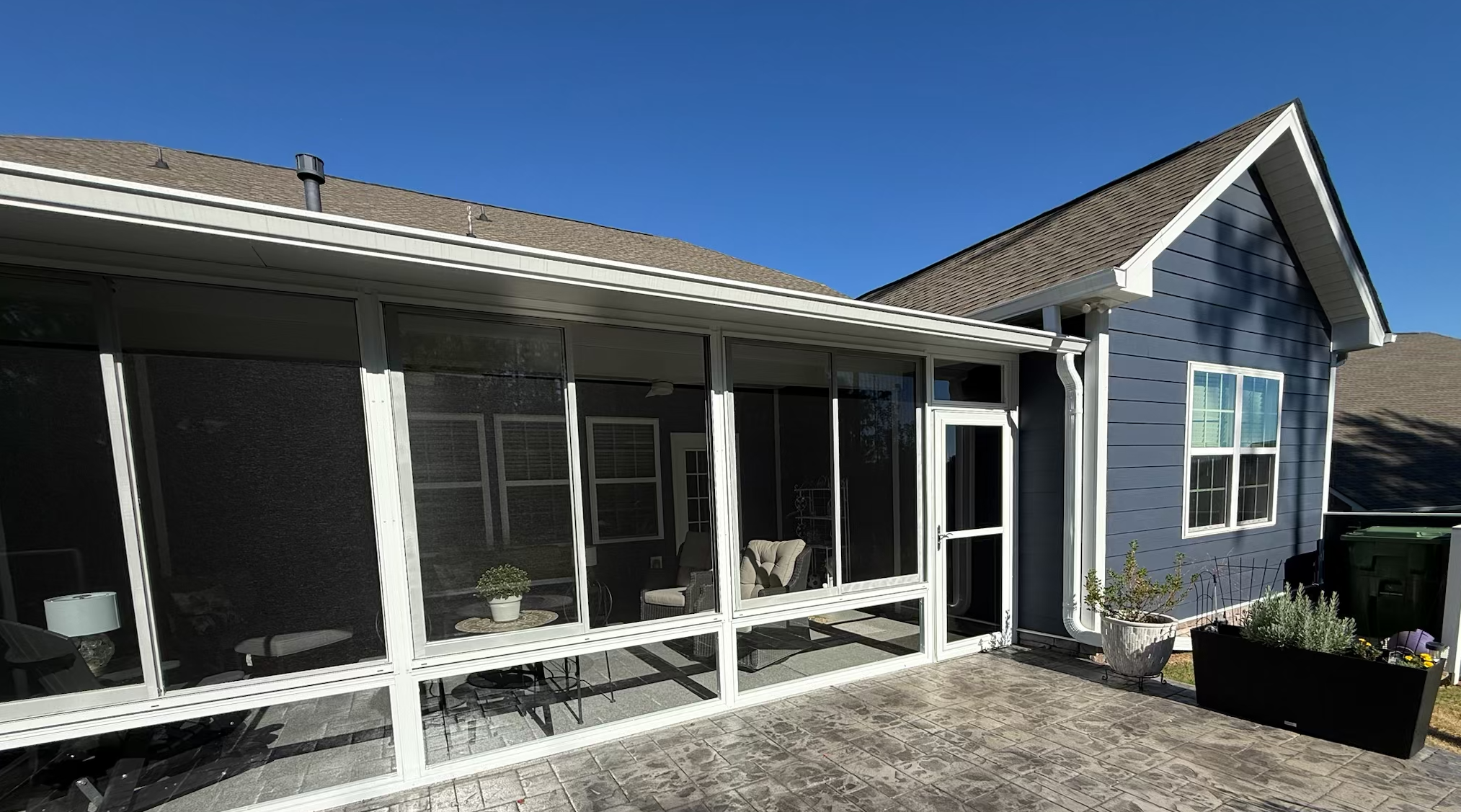
There is no reason that a screened porch conversion can’t move along as planned during the winter when site conditions and installation requirements allow it. An existing covered porch may give the project a useful starting point because some of the structure is already in place.
That doesn’t, however, mean that every porch is ready for windows, insulation, and heating. The first step is to evaluate whether the existing space can support the sunroom you want to build. Things like your roof, foundation, framing, and drainage all help to determine what can stay and what can’t.
The season is only one part of the equation. The condition of your porch is another.
Does Having an Existing Roof and Foundation Make It Easier?
Having an existing roof and foundation can, in some instances, make it easier and, in others, not at all. If your existing roof and foundation are suitable for the proposed design, keeping them may reduce the amount of new construction involved.
The most important word in that sentence is “suitable.”
There was an original intent in building the screened porch, and depending on what those goals were, there will be times when the structure is solid enough and others when it isn’t. The only way to know for sure whether an existing structure is suitable or not is to have a professional evaluation of the design.
Your contractor should assess the structure and explain which parts can be reused, which need improvements, and how those findings affect your budget. Starting with an existing porch can be an advantage, but the goal is to build a room that performs well long after installation day.
What Parts of Construction Depend on the Weather?
Winter weather can affect certain parts of the conversion more than others. If your project requires new footings or concrete work, cold temperatures can require additional precautions. Fresh concrete needs protection from freezing and appropriate curing conditions so it can develop strength properly.
Sealants, coatings, and other installation materials also have manufacturer’s requirements that your contractor needs to follow. Rain, ice, and unsafe working conditions may affect when exterior work can happen.
That doesn’t mean that the entire project needs to come to a halt if the temperature drops or we experience a wintry mix; that just means certain aspects of the build might be delayed.
A realistic timeline should allow for weather-related adjustments.
Will Your Converted Sunroom Be Comfortable in Winter?
The comfort of your sunroom depends on how it was planned, designed, and constructed.
A three-season sunroom offers protection from the wind and rain, but it does not incorporate heating and cooling, which means that the extreme temperatures will affect your use of the space. Adding windows or a heater, by itself, will not tell you whether the room will hold a consistent temperature or not.
Window performance, insulation, air sealing, and the room’s heating and cooling approach all need to work together. The U.S. Department of Energy explains that window frame materials and glazing technologies affect thermal performance, making window selection an important part of the planning process, not an afterthought.
How comfortable your outdoor space is depends on the thought and care put in during construction and planning, not on adding things afterwards.
How Long Does a Winter Porch Conversion Take?
Unfortunately, there is no responsible way for us to give you a timeline that is appropriate for every porch conversion. Since no two jobs are the same, the time frames to build and convert will vary.
A conversion that can use a suitable existing structure will have different requirements from one that needs foundation improvement, roof repairs, or substantial framing changes. Your overall timeline may include evaluating the porch, finalizing the design, obtaining necessary approvals, ordering materials, scheduling installation, and completing inspections.
If you have a particular holiday or gathering in mind, make sure to let your contractor know. They can explain what may be possible under your time constraints and what is not reasonable.
Should You Wait Until Spring to Start Planning?
There is no reason to wait on your plans to convert your screened porch.
The quality of your sunroom conversion rests on its design, planning, and timeline solidification. Starting the conversation during the fall or winter gives you plenty of time to understand and consider your options.
Once you identify the structural work that needs to be done, you can discuss your budget and talk about your goals. Even if construction happens later, you can make decisions before the season so you will be that much more ahead of the game when it comes time to actually start the project.
Rather than spending another spring wishing your porch offered more protection from pollen, rain, and changing temperatures, you can begin exploring a solution now. There is no need to rush decisions or choose options without careful thought. There is also no need to put off getting your questions answered for if and when you do decide to begin the project.
Explore Your Options With Zero-Down Financing
If the upfront cost is what’s keeping your sunroom on your wish list, Express Sunrooms of the Carolinas offers zero-down financing options for qualified customers.
That means you may be able to get started with no money down and spread the cost over time, subject to credit approval and financing terms. To start planning, visit our Real Pricing Guide, try our Outdoor Living Calculator, and learn about zero-down financing. With these resources combined, you can establish a starting point before discussing a quote for your particular space.
Whether you’re hoping for more room for the holidays or a place to sit and enjoy the spring, now is a perfect time to dream big and have your sunroom conversion made exactly the way that you want it. Contact us today and be spring-ready!