
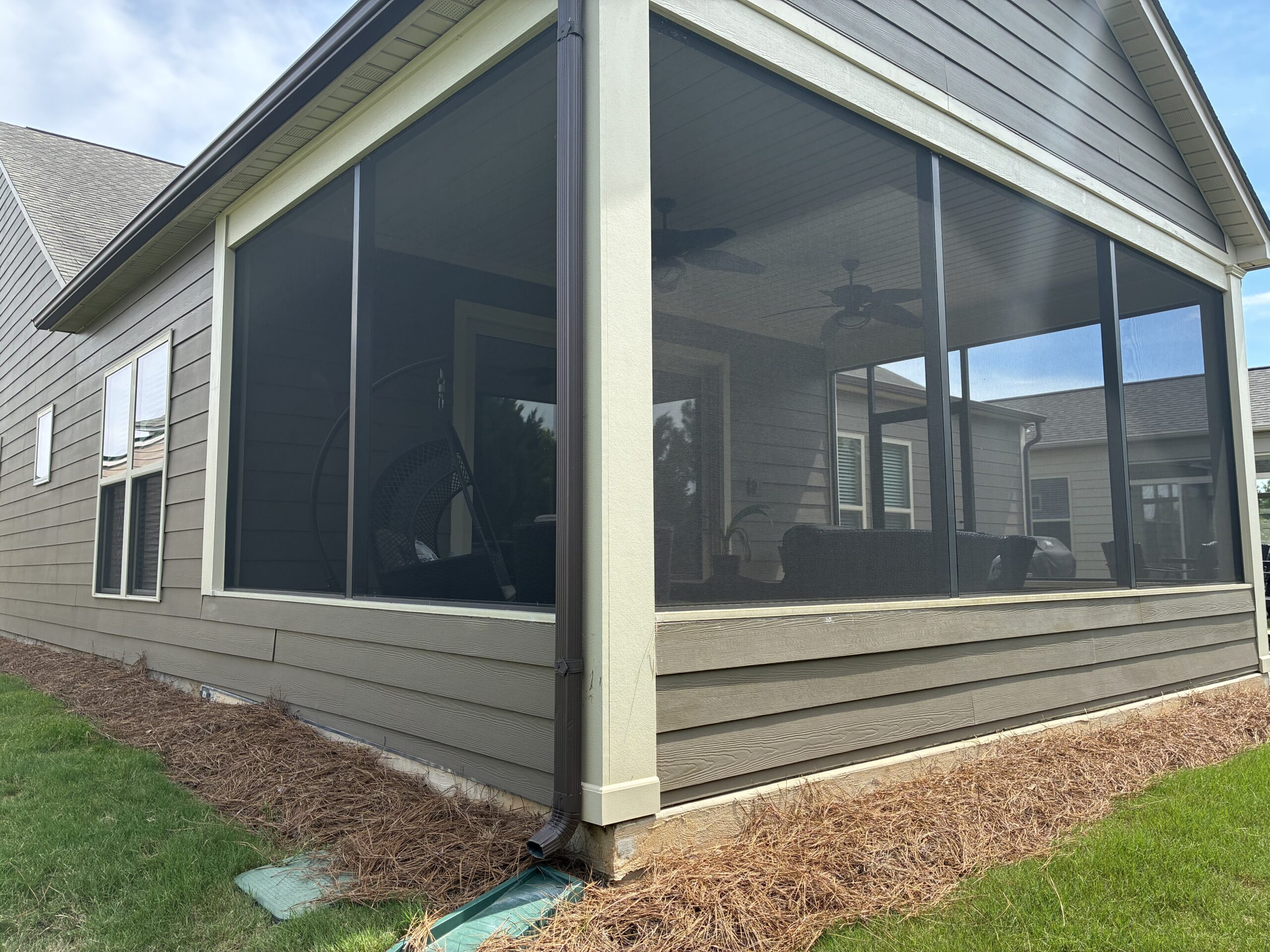
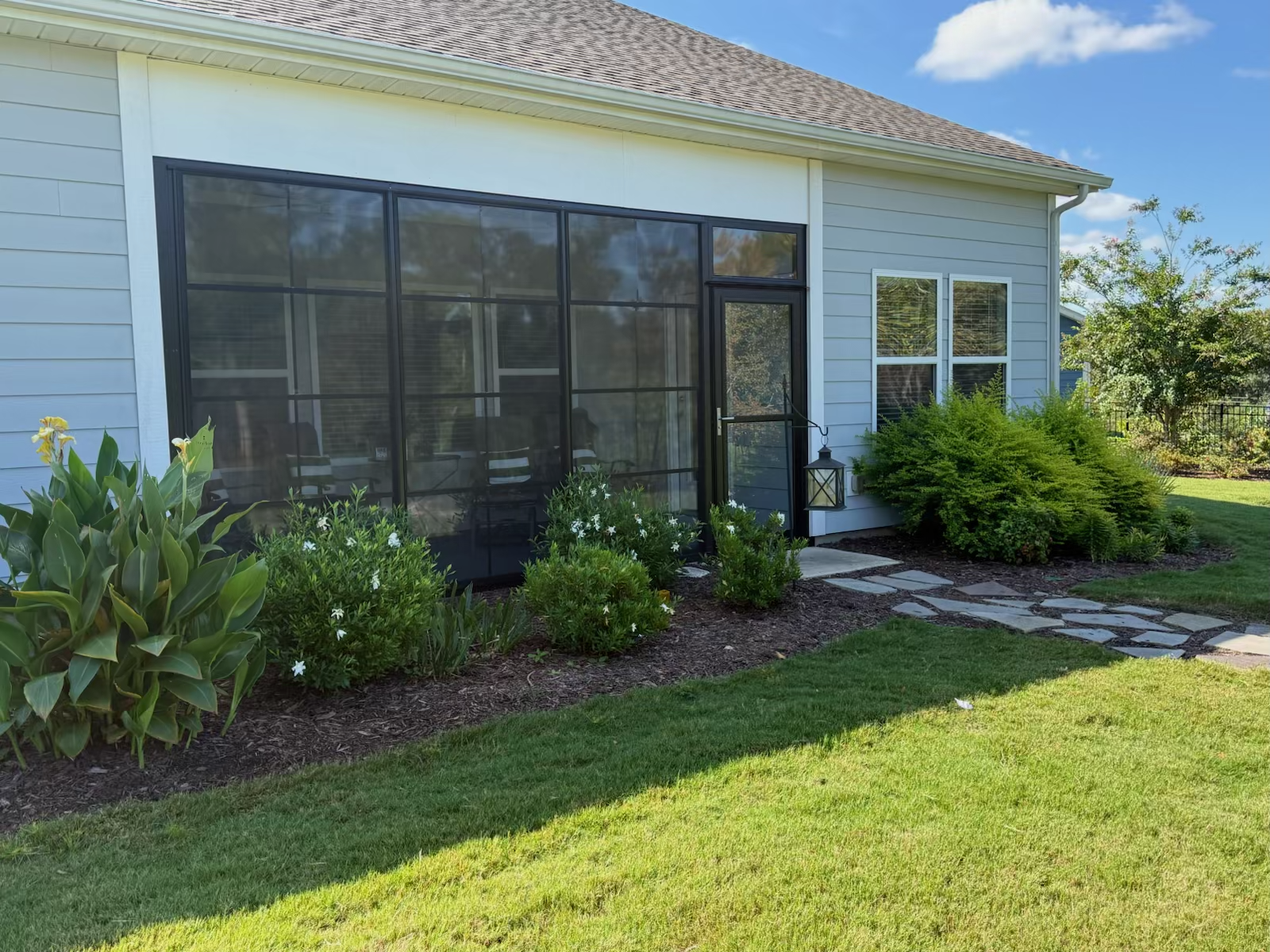
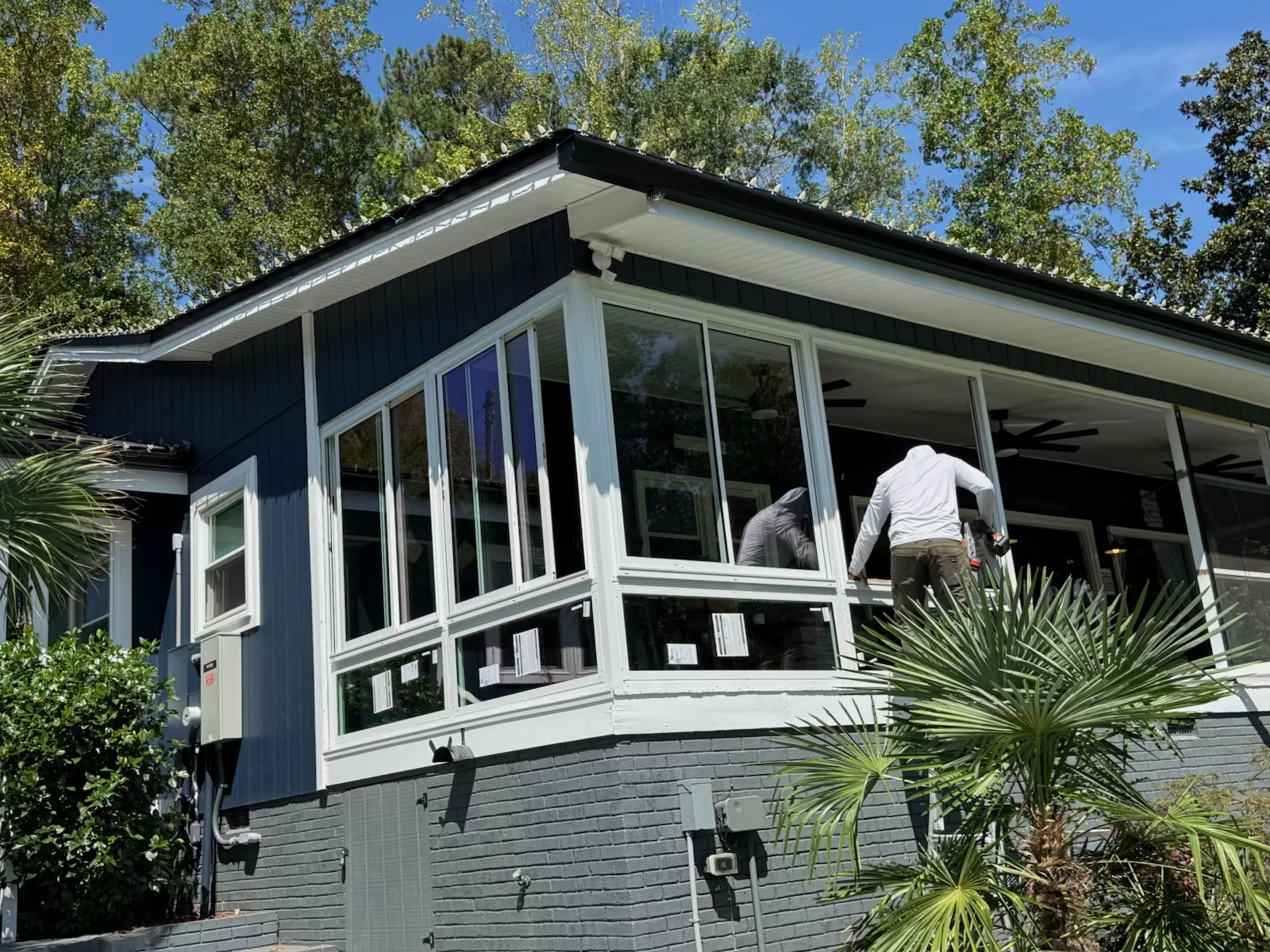
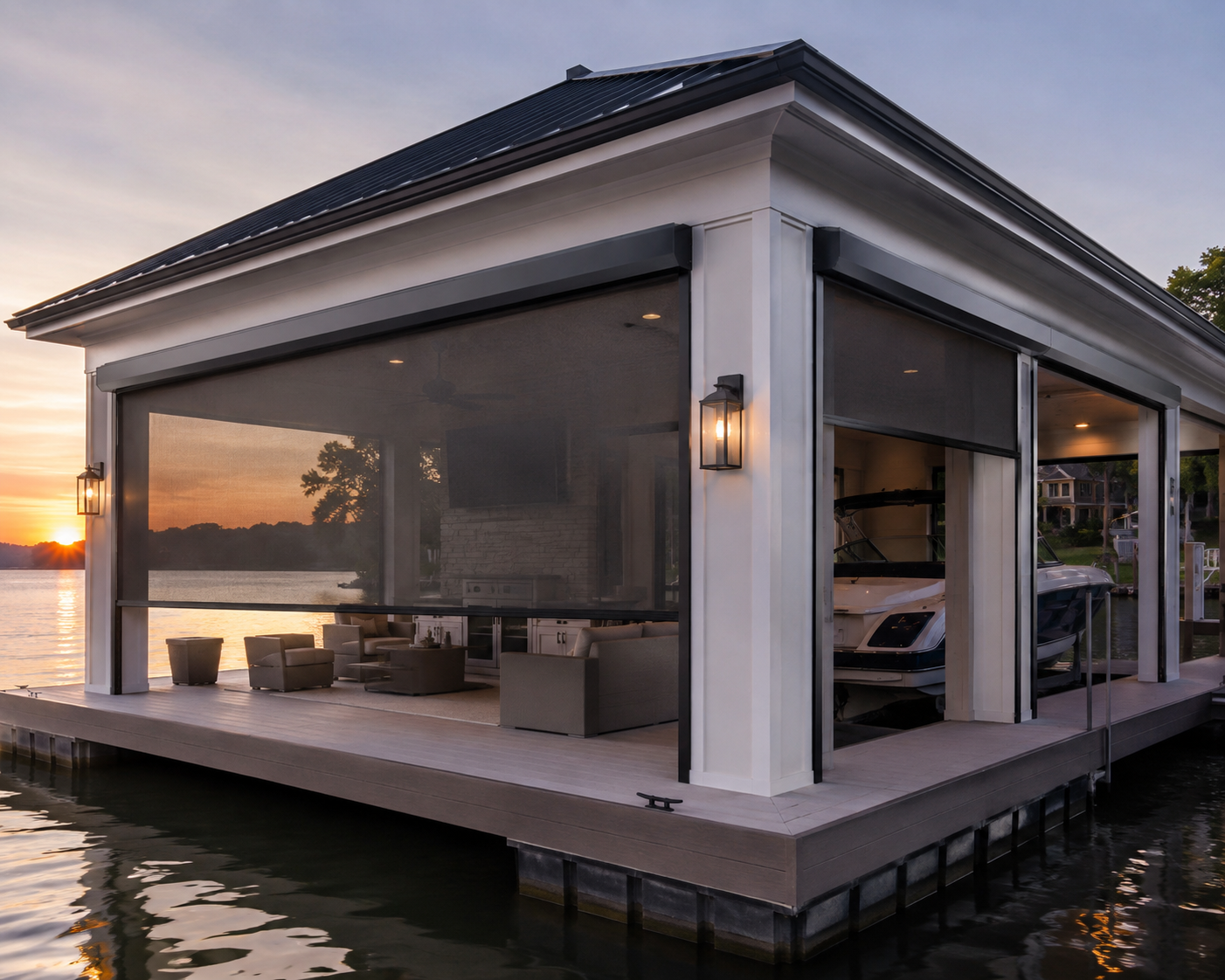
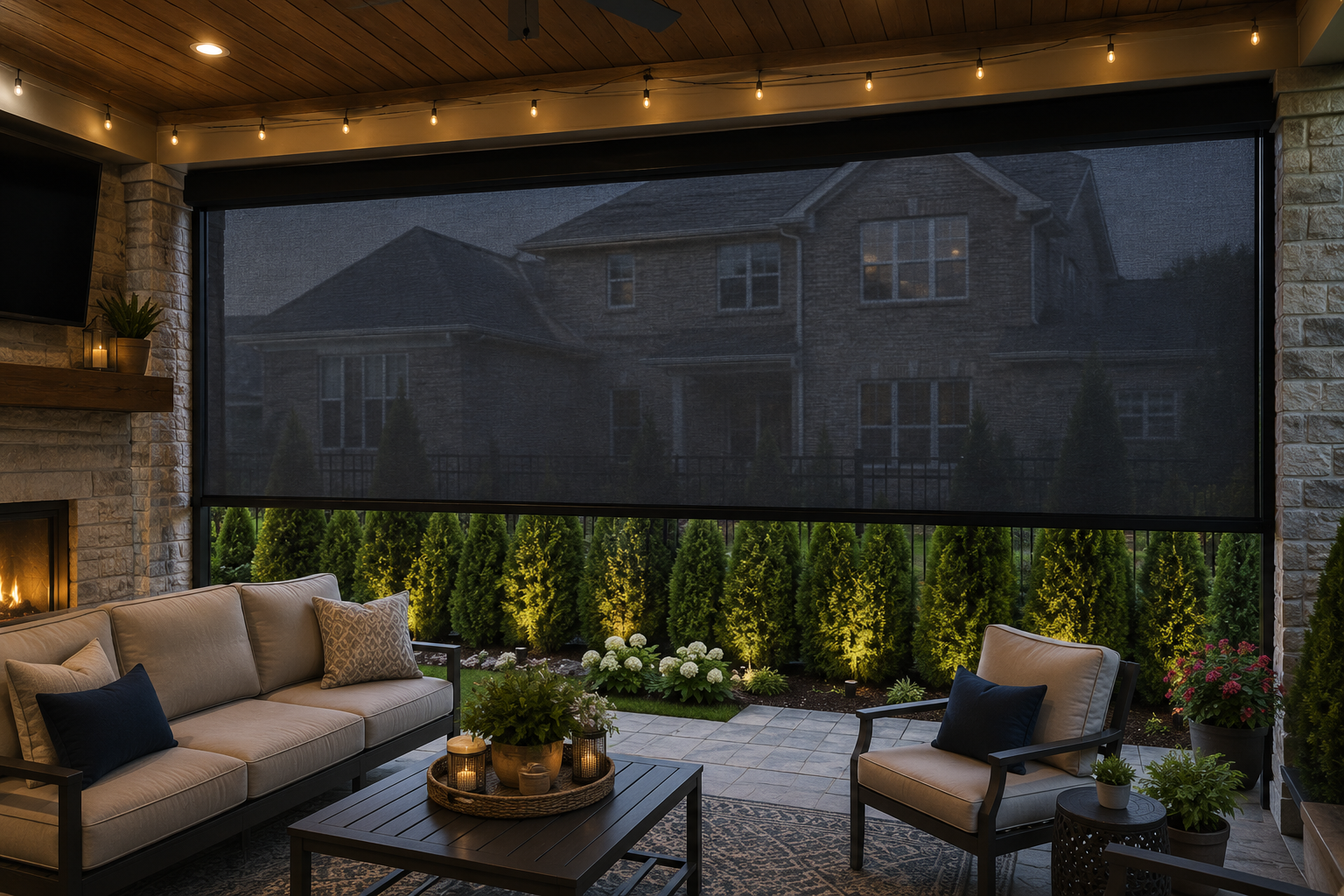
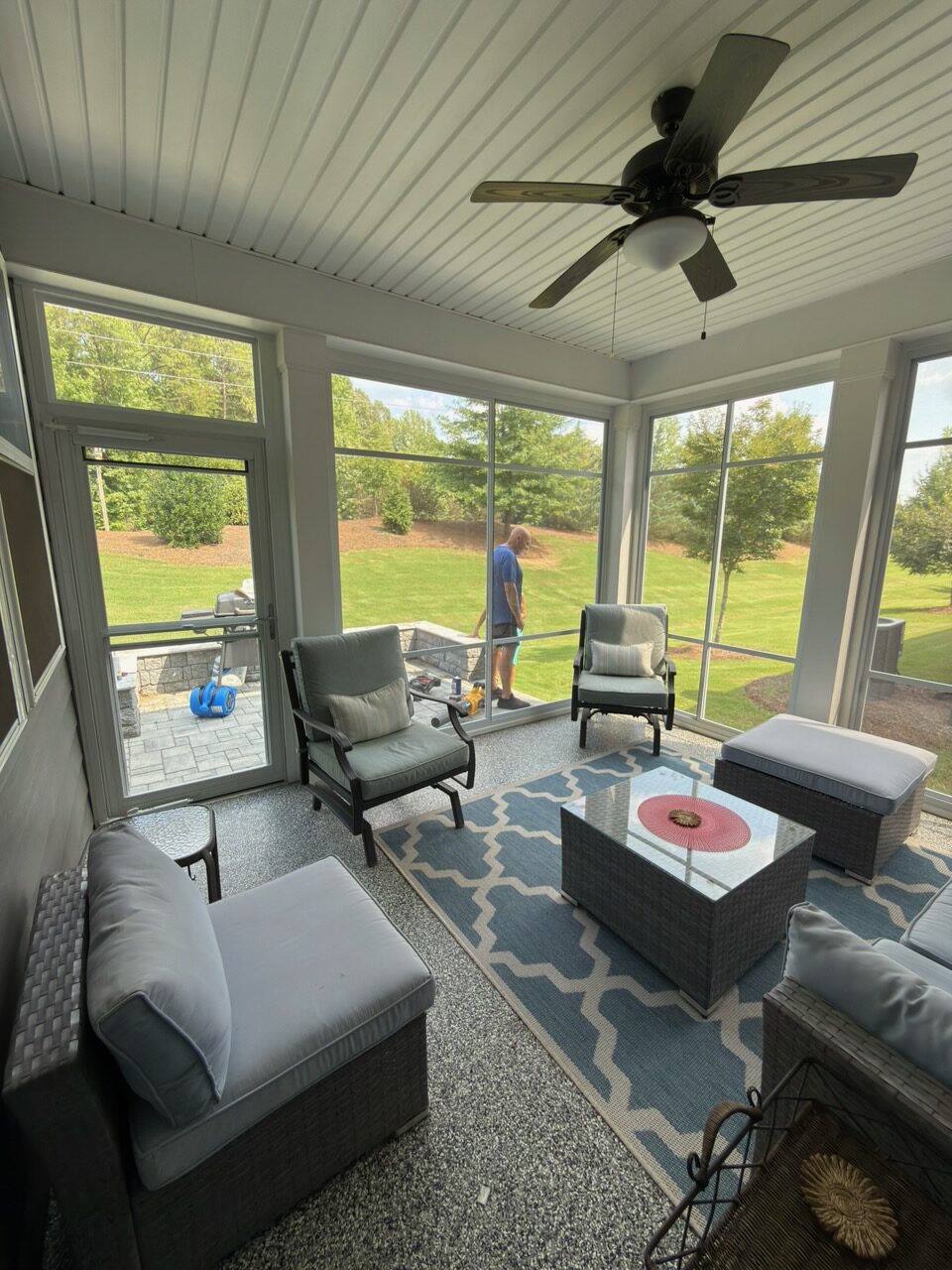
As the spring weather turns to summer, things are really heating up in Rock Hill, SC. With summer comes good times and outdoor fun, but there is nothing fun about mosquitoes and bugs. Now is the perfect time to consider bringing the great outdoors inside with a 3-season sunroom or 4-season sunroom in Rock Hill, SC. Although the two seem very similar, they differ in critical ways. What is the difference between the two, and which is best for your individual situation? That really depends on certain factors.
What is a 3-Season Sunroom?
A 3-season sunroom is an additional entertaining space that can be used comfortably during the spring, summer, and fall, but typically not during the coldest months of the year with comfort. For practical purposes, a 3-season room is just a step up from a screened-in porch. It is enclosed and has large windows instead of screens. The windows can help to protect you from outdoor elements such as wind, rain, and pollen, while still enjoying the fresh air and sunlight.
- Typical Features of a 3-Season Sunroom
- 3-season rooms can vary greatly in style and build from one to the next. In general, they typically have:
- Single-pane or double-pane windows
- Aluminum or vinyl framing
- Minimal insulation
- No dedicated heating or cooling system
- Siding or removable windows for ventilation
Because most 3-season rooms aren’t fully insulated, they rely mostly on comfortable outdoor temperatures to enjoy them in peace. That’s why there are three seasons; the fourth season (winter) is usually a time when it is too cold to enjoy.
Pros of a 3-Season Sunroom
Lower Cost
One of the biggest advantages of a 3-season versus a 4-season sunroom in Rock Hill, SC space is that they tend to be significantly less costly than a 4-season room because they require fewer materials and less complex construction.
Quicker to Install
3-season rooms are generally easier and quicker to build, which means less disruption to your home and a short time to be able to enjoy your new space.
Perfect for Mild Weather
3-season rooms provide you with shelter from rain and wind. Most importantly, they shield you from bugs and other irritations from the outdoors.
Additional Entertaining Space
A 3-season room gives you additional entertaining space for three-fourths of the year. You don’t have to worry about the rain or high winds ruining your occasion. The weather is almost always tepid in a 3-season room.
Some Disappointments of a 3-Season Sunroom
Limited Winter Use
The biggest drawback of a 3-season room versus a 4-season room is that they are not usable during the cold winter months. Once the temperatures begin to dip, you will want to bring the party back inside.
Temperature Fluctuations
Although they give you access to entertaining space during most of the year, the hot summer heat can make them less than comfortable. The cold temperatures of late fall and winter might require some portable heaters to truly enjoy.
Not Considered a “Full” Living Space
Because a 3-season sunroom isn’t climate-controlled, it typically doesn’t count as year-round square footage in most home valuations. Therefore, the ROI of a 3-season sunroom will be significantly less than that of a 4-season sunroom in terms of home equity.
What Is a 4-Season Sunroom in Rock Hill, SC?
A 4-season sunroom in Rock Hill, SC is built with the intention to be a living space that you can use year-round or all four seasons. A 4-season room is fully insulated and designed to be comfortable regardless of temperature extremes. If built correctly, it functions exactly as the rest of your home, heating and cooling-wise.
- Typical Features of a 4-Season Sunroom
- A true 4-season sunroom typically includes:
- Double-pane or triple-pane insulated windows
- Insulated walls and roof
- HVAC integration or dedicated heating and cooling (like a mini-split or zoned)
- Energy-efficient materials
- Stronger structural components than the 3-season sunroom
Essentially, a 4-season sunroom is similar to a room addition and less like a porch enclosure.
Pros of a 4-Season Sunroom in Rock Hill, SC
Year-Round Accessibility
Because a 4-seasoned sunroom has an allocated HVAC system combined with double or triple-pane windows, you can use it comfortably year-round regardless of temperature fluctuations. Whether it is raining, windy, cold, or extremely hot, you can enjoy the space just as you would any other part of your home.
Increases Your Home Value
A 4-season living space has an ROI of approximately 50%-80%, which can significantly boost your property values. They are often viewed favorably by homebuyers as both additional space and a high-value addition. Unlike 3-season sunrooms, which aren’t seen as additional living space during an appraisal, 4-season sunrooms do.
Highly Versatile
Since you can enjoy a 4-season sunroom in Rock Hill, SC year-round, it can be used as an entertaining space, a family room, a home office, a dining area, a playroom, or an indoor garden space. Its uses are virtually endless.
Energy Efficiency
The walls and ceiling of a 4-season sunroom are insulated and built to maintain comfortable temperatures throughout the year without dramatically increasing energy bills.
Cons of a 4-Season Sunroom in Rock Hill, SC
Higher Upfront Cost to Build
4-season sunrooms require more materials and labor to build, which often means a higher investment upfront. Due to the excellent ROI, however, your investment not only allows you to enjoy your home with additional and unique space; it also increases your home equity for the long term.
Longer Construction Timeline
4-season sunrooms take longer to build than 3-season rooms. They are more complex to build, require more materials, and different subcontractors and subspecialties. Therefore, they traditionally take longer to construct.
Regulation Requirements
Unlike 3-season sunrooms, 4-season sunrooms may require stricter local and municipal regulations and permits, which can lengthen the building time and lead to red tape. Waiting for approval and permits can lengthen the time needed to build.
Climate Factors
One of the biggest factors to consider when deciding whether a 3 or 4-season sunroom is better is where you live. If you are in an area where there are mild winters, a 3-season room might be the perfect fix for most of the year. If you live in a climate where there are more temperature extremes or that has colder weather throughout the year, then a 4-season sunroom might make more sense.
How Do You Intend to Use the Space?
Another major concern is how you intend to use the space. If you want to use the additional space all year for an office or living room, then the investment of a 4-season room makes more sense. If you want a reading nook to sit and enjoy the seasonal temperature changes, then a 3-season room might be enough for you to enjoy the great outdoors during temperate weather without the expense of a 4-season sunroom construction.
Budget Considerations
When it comes to investment and how much your budget will allow, 3-season sunrooms are more budget-friendly and a great option for homeowners who want the additional space without a huge financial commitment. A 4-season sunroom in Rock Hill, SC is a heavier investment upfront, but they add value for the long term and typically provide a unique outlet for resale attractiveness.
Maintenance Difference
There are different maintenance needs for a 3-season versus a 4-season sunroom in Rock Hill, SC addition. 3-season sunrooms often require less maintenance because they don’t have systems like HVAC to maintain. 4-season rooms tend to require more and more expensive maintenance over the years.
Which Option Adds More Value, 3-Season Sunroom or 4-Season Sunroom in Rock Hill, SC?
If resale is a concern, then a 4-season room might give your home a competitive edge in the homeselling market. Since they add square footage to your home, the ROI is much higher than if you opt for a 3-season sunroom. However, a well-designed and built 3-season room can still boost curbside appeal and make a home more attractive to home buyers.
Is a 3-season or 4-season sunroom in Rock Hill, SC better for you? Unfortunately, there is no clear right or wrong answer. If you are looking for an affordable way to enjoy the great outdoors during the seasonal changes, then a 3-season sunroom provides outdoor views during the warmer months. If you are looking for a comfortable space to enjoy all year round, then a 4-season room is hard to beat.
In the end, it really depends on the climate, your budget constraints, and your long-term goals for the space. If you are on the fence about which one is right for you, let our design team help you make the decision. It is an important one and worth hiring an expert builder to walk you through the pros, cons, and process. Express Sunrooms of Charlotte is a full-serv
