
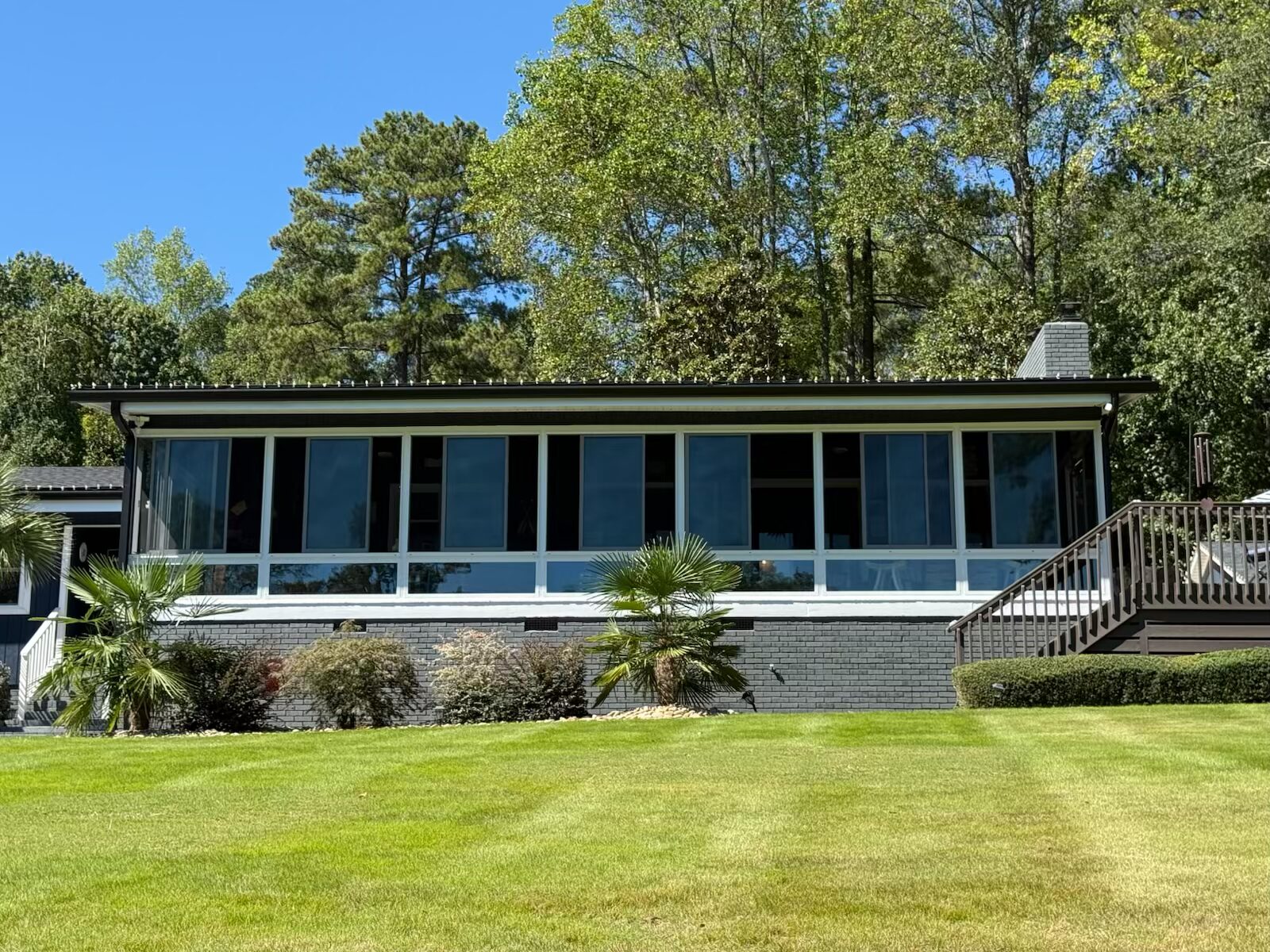
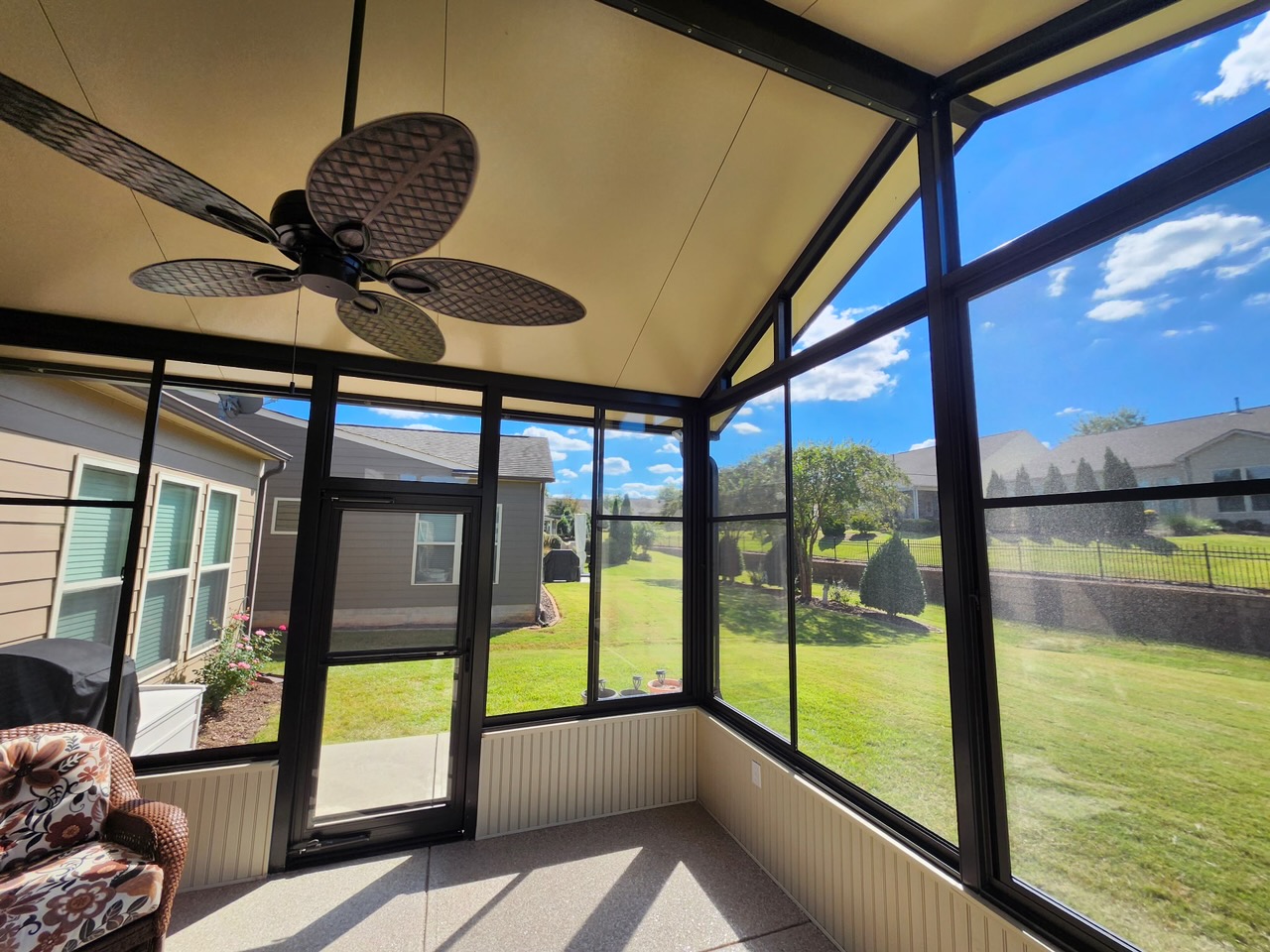
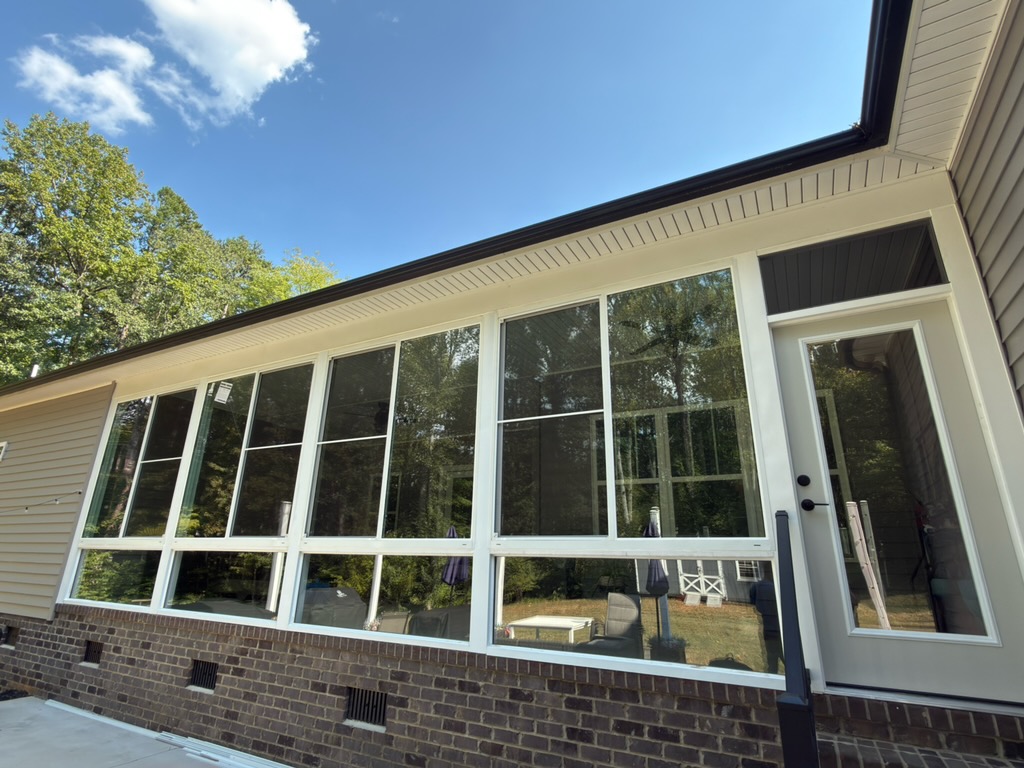
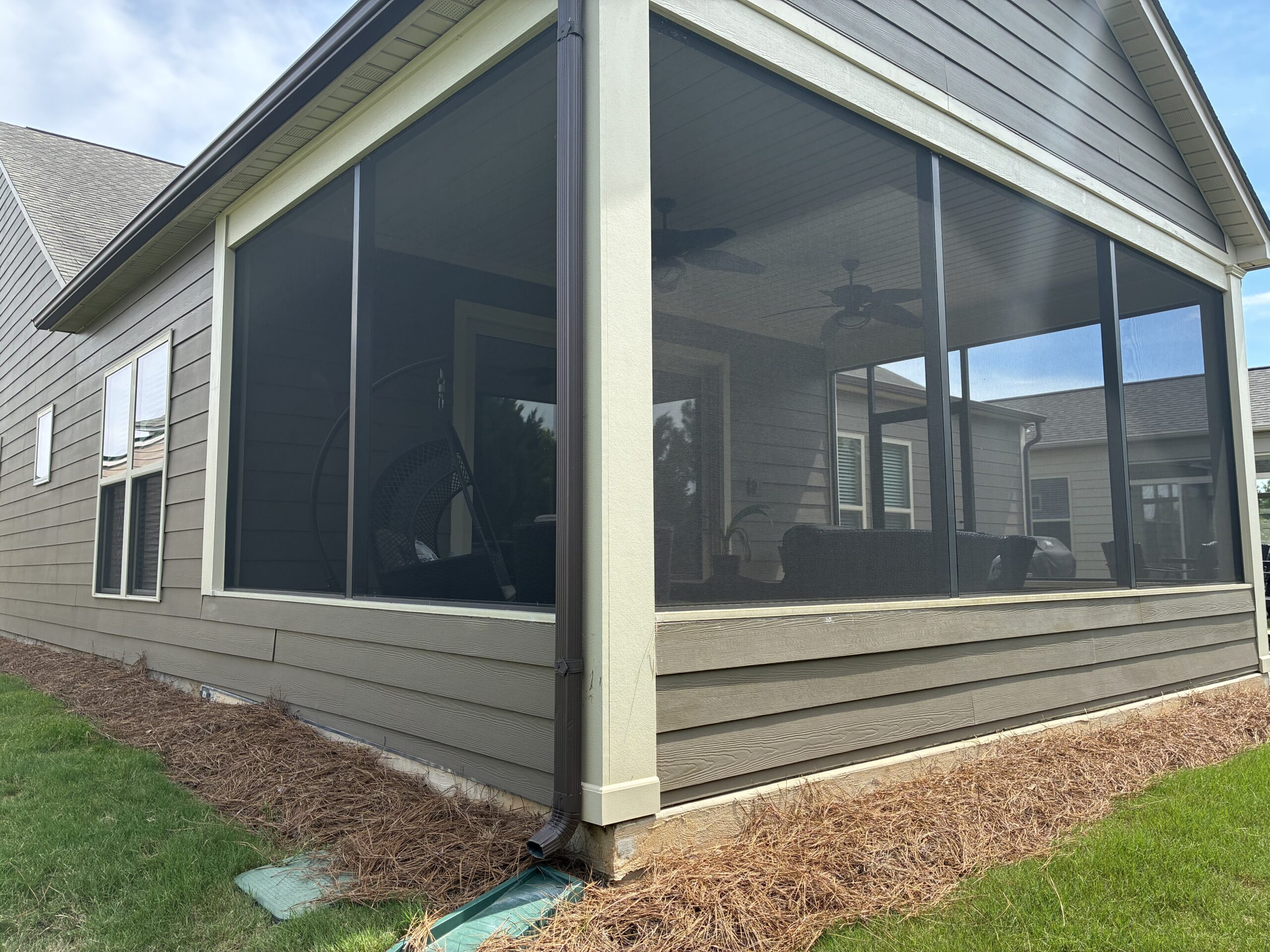
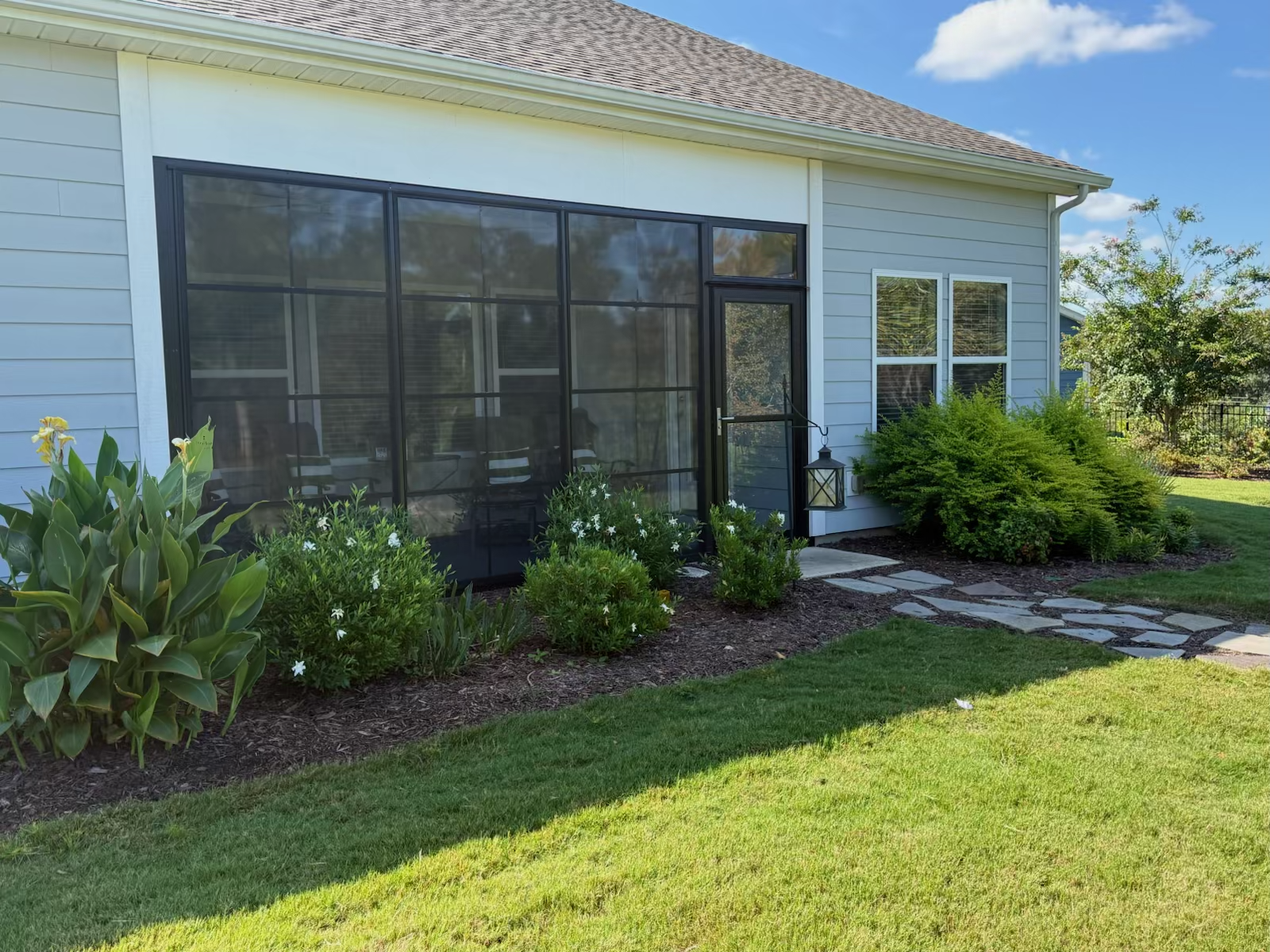
As the weather finally turns the corner into less humidity and more cool breezes, many homeowners in the Charlotte area are looking for ways to convert their outdoor areas so that they can use them well into the winter or year-round.
If you have an existing outdoor area that would be a perfect spot to create memories into the holidays, you might be considering the potential of converting it to a more functional space throughout the year. This begs the question, “Can you turn a covered patio into a sunroom?”
Although we can’t definitively say “Yes” across all situations, in many cases, a sound patio space can be used for a sunroom conversion. The first step, however, is determining which parts can be reused and which need upgrading or total demolition.
Can You Keep the Existing Patio Roof?
Having a roof already in place is a good start sometimes, but it doesn’t automatically mean that it is suitable for a sunroom conversion. Before planning around it, you need a contractor to evaluate its condition, support, connection to the house, and suitability for a proposed enclosure.
If you want a four-season room, things like insulation and heating and cooling will be things to consider. The goal, therefore, is to find out what your existing patio can become before you decide how you want it to look. Even for sunrooms, form follows function.
Can You Build a Sunroom on an Existing Concrete Patio?
Possibly—but a concrete patio and a foundation designed to support a sunroom are very different things and not necessarily built the same way.
Your contractor will need to evaluate the slab, supporting foundation, drainage, and the requirements for the planned structure. A patio can appear completely fine for chairs and a grill, but it can still require extensive work to support a sunroom. A comprehensive evaluation is the only way to know for sure how to proceed with a sunroom conversion.
Should You Choose a Three-Season or Four-Season Sunroom?
The best way to answer that question is to first decide how you want to live in the space.
If you want to use it as a gathering spot for the holidays or to settle in during the winter to watch movies, then a four-season room will be the better of the two. If you just want to extend your time outside with comfort and convenience, then a three-season sunroom conversion might be enough.
It is important to examine exactly what you want to use the space for before deciding how you want to convert it. It’s important to talk with a contractor so that you can reasonably come up with a design that will check all of your needs, and hopefully, your wants.
What If You Still Want an Open Patio Sometimes?
Although we are now heading into the fall and winter, which means you want a more protective space, that might not be the same when the spring and summer come around. A sunroom isn’t the only way to improve a covered patio.
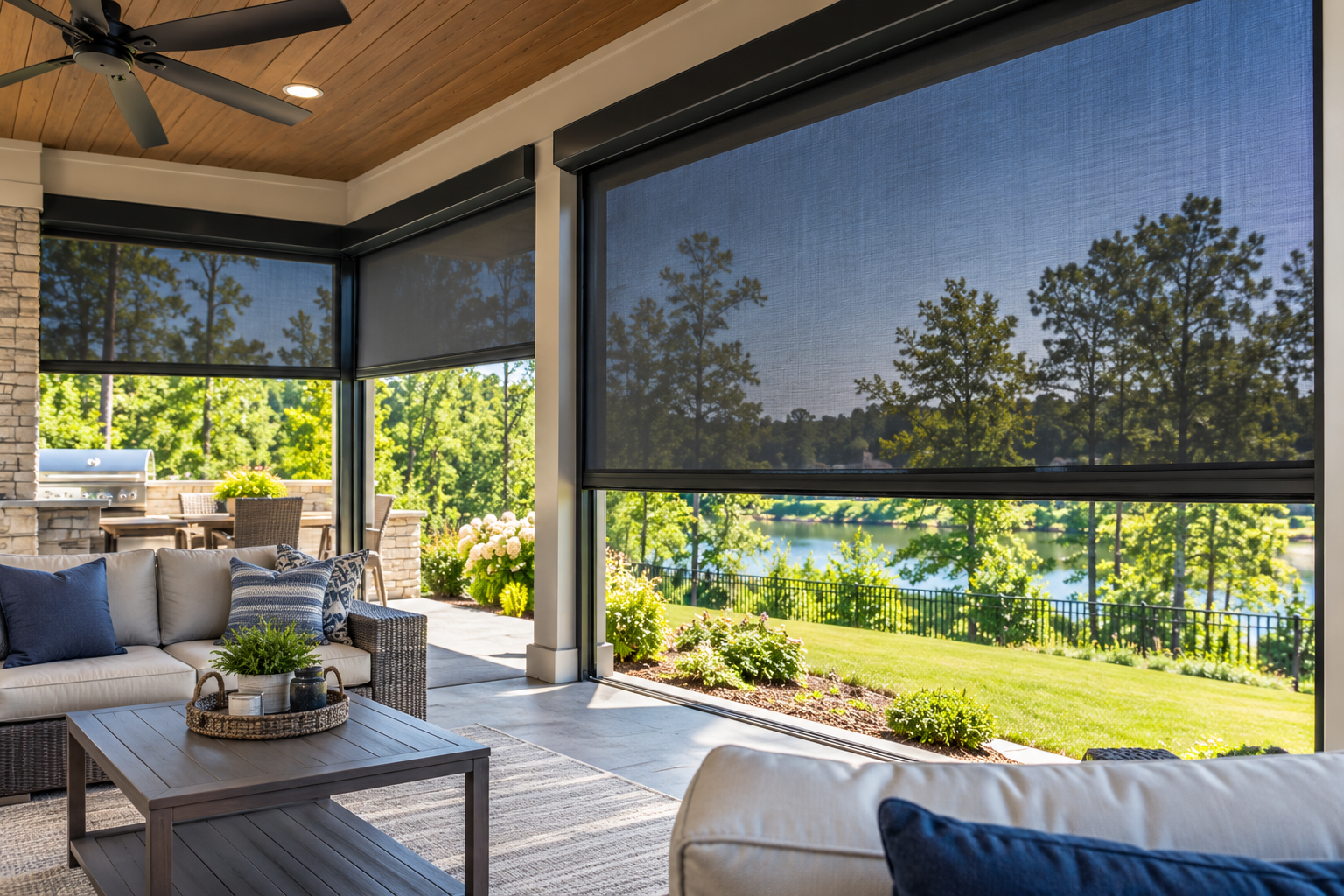
If you enjoy the open-airiness of the patio but you also want protection from insects when they surface, retractable screens may be another option to consider. Retractable screens allow you to lower them for an enclosure when you want a screened space, then retract them when you want the patio free and open again.
Porch panels are another option that is worth discussing if you want an open-air feeling with added protection. The right choice really depends on your overall goals for weather protection and year-round comfort.
What Is the Difference Between Retractable Screens and Motorized Screens?
Retractable screens allow you to convert your patio or deck to a screened enclosure. That way, you can maintain what you love about the openness of your patio but also not have to run for cover the minute the mosquitoes come out.
Motorized screens are also retractable screens, but they open and close with the touch of a finger rather than requiring you to manually crank them open and closed. In essence, motorized screens are just more convenient for homeowners.
Do You Need a Permit to Convert a Covered Patio?
One of the most frequently asked questions we get from homeowners is whether they need a permit to convert their covered patio to a sunroom. The best way for us to answer that question is to check with your local building department. An existing roof doesn’t necessarily mean an enclosure is automatically approved.
Permit requirements depend on your location and the scope of the work. Sunroom standards also address local requirements such as setbacks, drainage, and other site conditions, so they are specific to the property. Also, if your neighborhood has an HOA, you will need to find out what requirements they have for approval.
Is Converting a Covered Patio Cheaper Than Building a New Sunroom?
Reusing suitable parts of an existing patio may, in some instances, reduce some construction work, but it does not guarantee a lower total cost.
The total price of a sunroom conversion depends on factors such as the room size, the condition of the existing roof and structure, foundation work requirements, enclosure system chosen, and various finishes. A four-season sunroom conversion also needs a plan for insulation and heating and cooling.
Therefore, the real question should be, “What would it take to turn the patio you already have into the room you actually want?”
Give Your Covered Patio More Days on the Calendar
Your covered patio might already have the right location, views, and space that you enjoy. A three-season sunroom conversion can help you extend the time outdoors and enjoy all the things we love about the great outdoors without the things we don’t love so much.
At Express Sunrooms of the Carolinas, we can help you explore sunrooms, porch conversions, and retractable screens based on how you want to live in your new outdoor space.
Our real pricing guide can help you get a rough estimate of what a project will cost and also offer more options for enclosing your outdoor area or starting new. Also, our zero-down financing means that you can enjoy today and pay over time. See if you qualify with a no-risk credit check today.
Life is better outdoors.